Catechetics

Dec 17 – O Wisdom

On the 17th of December during the Liturgy of the Hours (Vespers, also called Evening Prayer) the Church begins the series of “O Antiphons” that we encounter each Advent. On these hallowed evenings I will write a short reflection for the current antiphon. Some may not know that the hymn O Come, O Come, Emmanuel is a musical composition of the O Antiphons.


O Wisdom, O holy Word of God, you govern all creation with your strong yet tender care. Come and show your people the way to salvation.

The Wisdom of God is prevalent throughout the Sacred Scriptures in many locations, including the obvious ones such as the Book of Wisdom, as well as many references to the Holy Spirit, and to the life breath of God – ruah in Hebrew. An example of ruah can be found in Genesis when God breathed his life-force into Adam.

The Greek word for wisdom is sophia – and the finest Church in the East was dedicated to Holy Wisdom, Hagia Sophia in the city that was formerly known as Constantinople or Byzantium, or currently Istanbul in present-day Turkey.
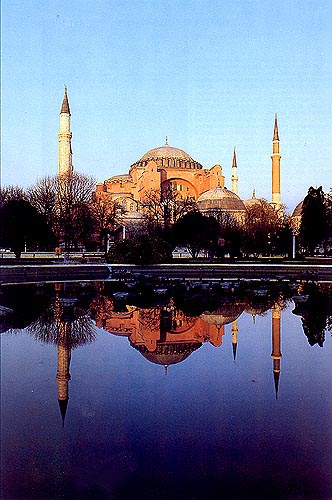
(Here is a photo of this marvelous Byzantine Church and architectural wonder)


Let us pray for the day when the Wisdom of Allah will inspire Muslims to return this beautiful Church back to Eastern Christians.

For that matter, let us pray each day that the Holy Spirit would fill us and direct us and guide our every activity.

On this holy evening – the Holy Spirit should be the focus and attention of our prayer, our thoughts and our movements. The day of the Messiah draws near – make straight the pathway, prepare for Him with devotion, dedication and joyful hope!
Categories: Catechetics | Leave a comment

Pope’s Church


Today is the feast of the Dedication of the Lateran Basilica in Rome.

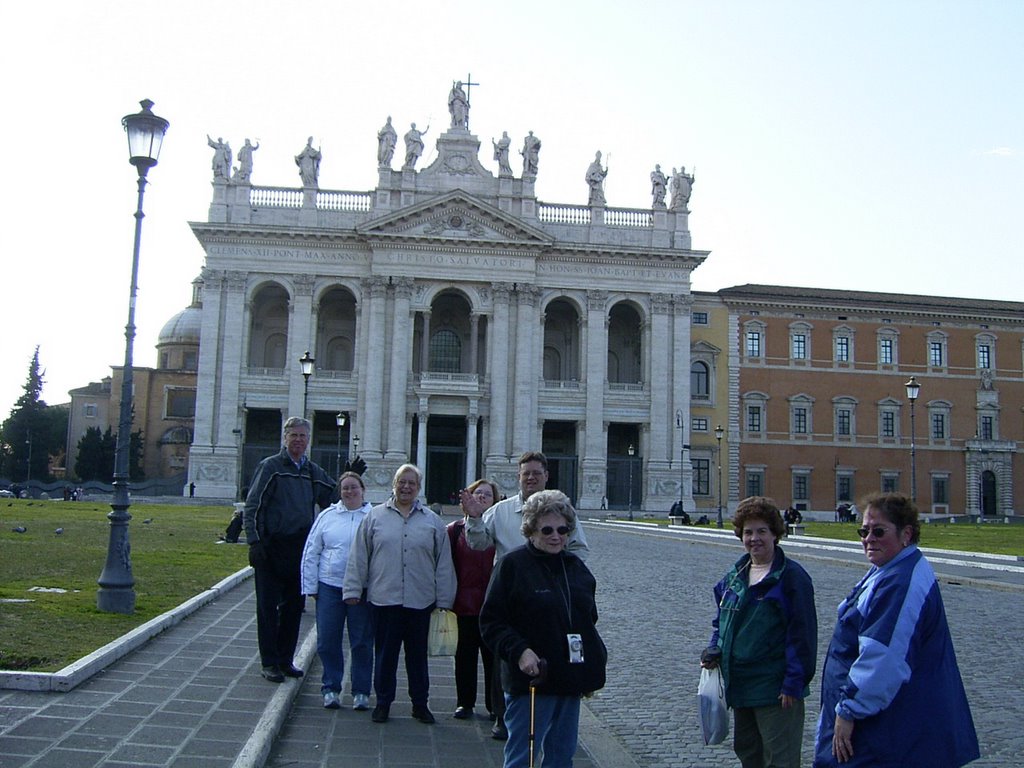
The Basilica of St. John Lateran is the Cathedral Church of the Bishop of Rome – who also goes by the title “Pope.”

(this is the facade of San Giovanni in Laterano)

Most people [incorrectly] assume that St. Peter’s Basilica is the Cathedral of Rome, but it isn’t, and never has been, by the way.

The Cathedral of the Pope is St. John Lateran, which is located in south-central Rome. Vatican City (which is an entirely different country altogether) is located northwest of Rome. The pope lives in Vatican City, but there are several properties throughout the city of Rome that belong to the Vatican, including the Lateran Palace – which is where the popes used to live a long time ago.

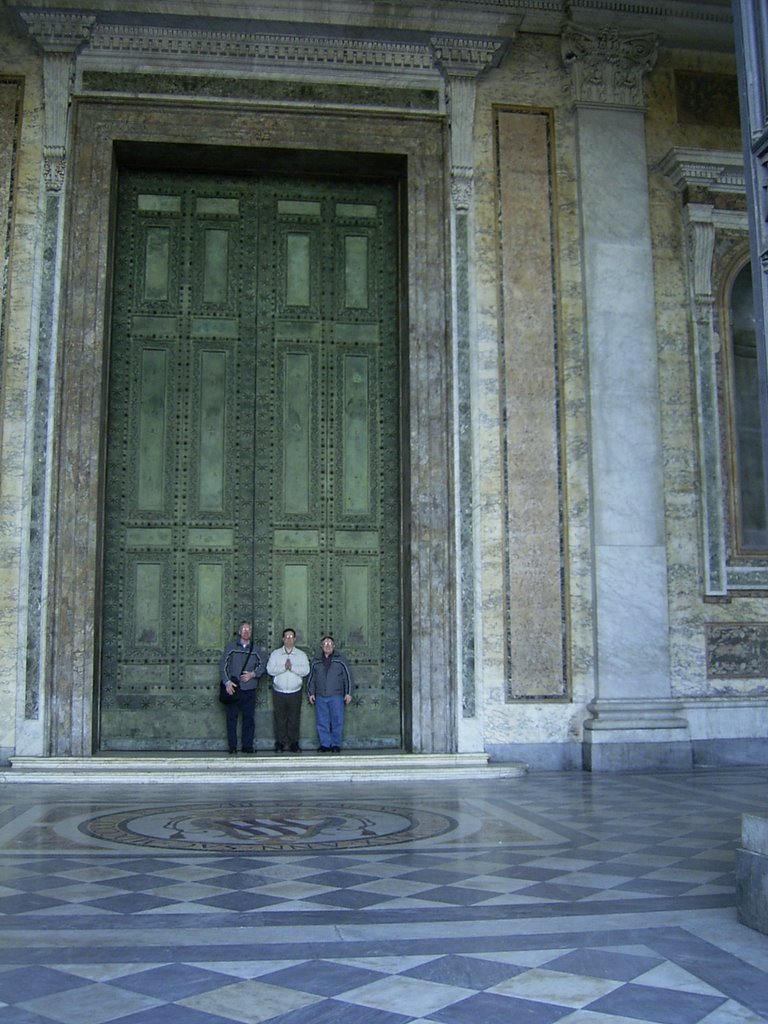
(this is a photo of the doors that you enter the basilica through – yes they really are THAT big!)

The church of a bishop is the church where the cathedra (chair) is located. In fact, when we speak about papal infallibility, we sometimes use the term “from the chair,” meaning that when the Pope speaks infallibly he does it from the “chair of Peter,” that is, as the universal pastor of the entire Church.

In every diocese in the world the cathedral is simply the church that contains the bishop’s chair – a sign of his authority and of his apostolic succession represented by the chair. Just as the Bishop of Rome is the successor of Peter, every bishop is the successor of the Apostles.

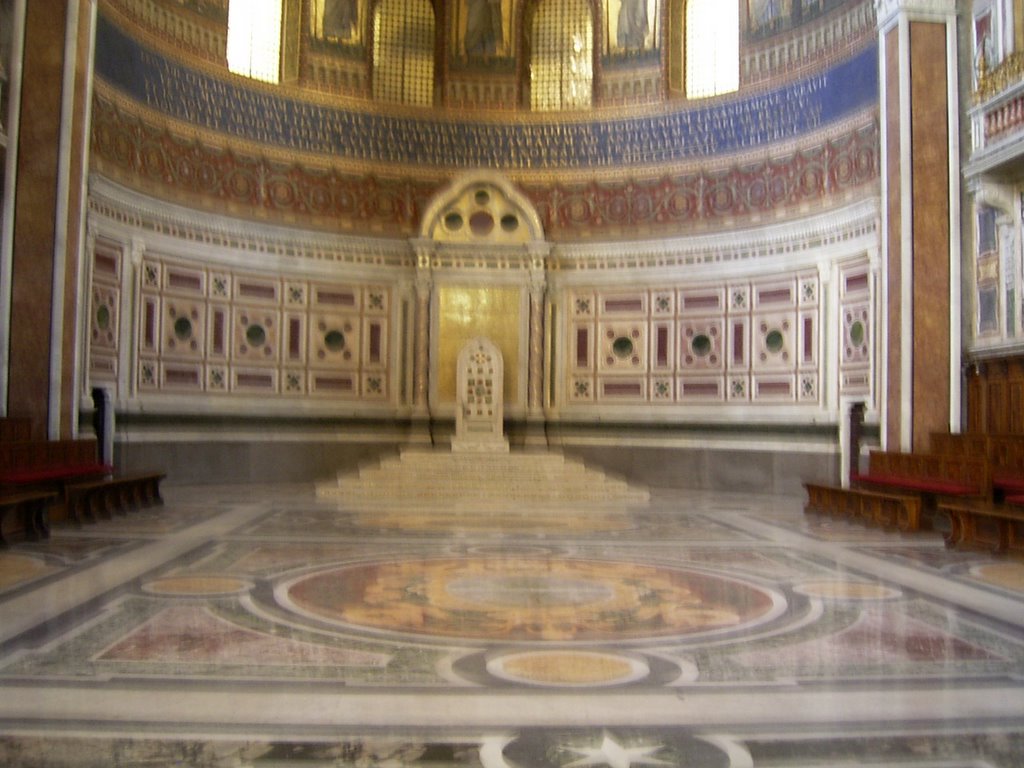
And the Chair of the Pope is located here at St. John’s shown here. (sorry about the fuzziness of this photo)

All of these photographs are from a pilgrimage I made to Italy in March of this year. A group of seven of us from Omaha joined about twenty others on a tour that included Venice, Florence and Rome. Our smaller group took several side trips to Assisi, Siena, and San Gimignano. We were in Rome ten days before JPII passed away (in fact, we did not get to attend an audience with him, because he was still in the hospital).

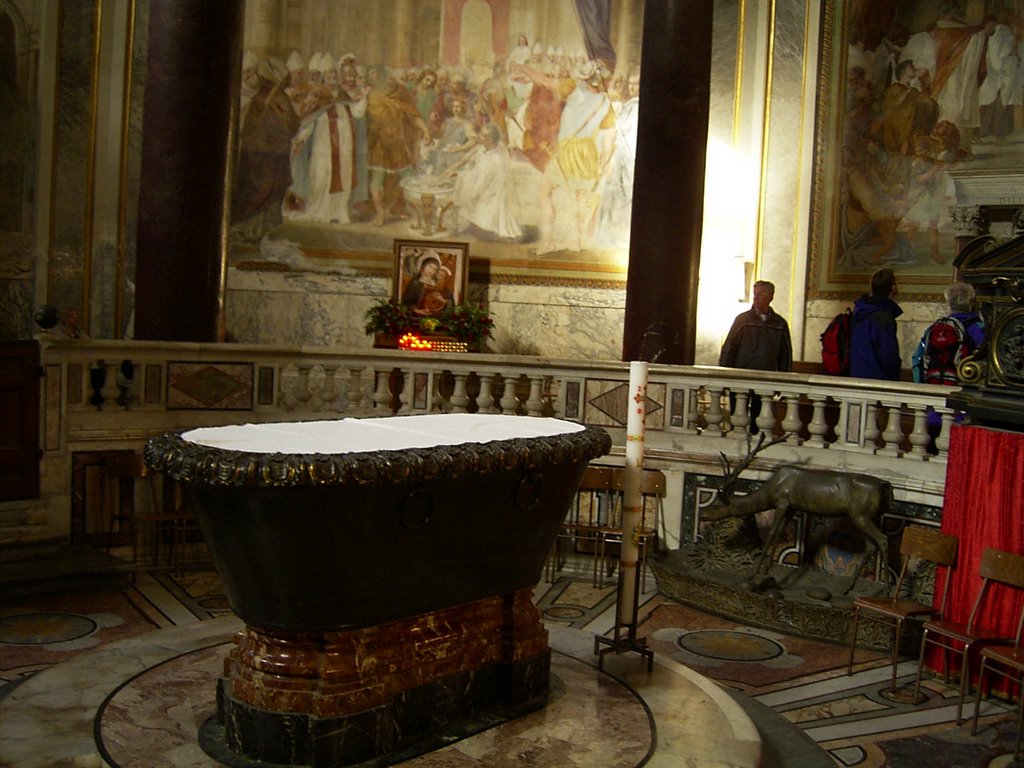
So the universal Church celebrates the dedication of the universal cathedral on this day. If you ever get a chance to see this beautiful church, be sure and include a tour of the baptistery (a separate building) where the pope would baptize new Catholics on the Easter Vigil.

(In this photo notice the Easter Candle next to the font, and the sculpture of a deer drinking from a stream “like a deer that longs for running water, so my soul longs for you, O God” – Psalm 42:1)

Categories: Catechetics, Papal, Travel | 2 Comments

Tim LaHaye missed Mass today

Today is the 32nd Sunday in Ordinary Time – and it’s a shame that Tim LaHaye wasn’t with me at Mass this morning.

You see, in the Epistle we hear St. Paul using the very language that LaHaye and his followers base their “rapture” theology on:

For the Lord himself will come down from heaven, with a loud command, with the voice of the archangel and with the trumpet call of God, and the dead in Christ will rise first. After that, we who are still alive and are left will be caught up together with them in the clouds to meet the Lord in the air. And so we will be with the Lord forever. (1 Thessalonians 4:16-17 italics mine)


But the solution to all of this rapture talk is foun in the words of Jesus from Matthew’s Gospel reading for today:

Then the door was locked. Afterwards the other virgins came and said, ‘Lord, Lord, open the door for us!’ But he said in reply, ‘Amen, I say to you, I do not know you.’ Therefore, stay awake, for you know neither the day nor the hour.” (Matthew 25:10-13 italics mine)


Throughout the Gospels we hear the words of our Lord consistently urging us to be on guard, to be prepared for we know not when He will come again.

But the success of LaHaye’s Left Behind series shows that so many Christians do NOT heed these words of Jesus. They prefer to look for signs and clues – both in Sacred Scripture and in other places as well.

Tomorrow is promised to no one, folks – it’s as clear as that. Live each day of your life expecting and desiring that our Lord would return. Instead of waiting for the Kingdom – make it present by doing what Jesus commanded of you: feed the hungry, clothe the naked, visit the sick & imprisoned.

Who wants to be a foolish virgin when the bridegroom arrives? Or worse yet, who wants to be a goat when they are separated from the sheep?

God bless you all that serve our Lord faithfully, diligently and quietly. Your reward in heaven will be great.


Categories: Catechetics, Homiletics, Theology | Leave a comment

We Love You Terri

Last night I spent the evening with two remarkable people, Bob & Mary Schindler. They traveled to Omaha on the feast of All Saints to deliver a talk at Pro Sanctity’s annual Call to Holiness program.

As you probably remember, they are the parents of Terri Schindler-Schiavo, who was deprived nutrition and hydration on March 18th and died thirteen days later. View more info about Terri here.

I was so moved by the spirituality and love exhibited by these two people, as they shared the story about their beloved daughter.

How fitting it was to celebrate Terri’s life on this glorious feast. You see, All Saints Day is the day to celebrate and honor every saint.

For those unfamiliar with the Catholic teaching on the Communion of Saints – this is simply the belief that those in heaven can and do pray for us here on earth.

People oftentimes narrowly construe the term saint to only mean those canonized saints. But that is not the teaching of the Church. Everyone in heaven is a saint – that’s what the very term means. Canonization is simply a declaration by the Church that a given individual IS in heaven, and thus a saint.

God created you and desires for you to live with Him forever in heaven. Our job on this earthly sojourn is to prepare ourselves for that everlasting reality with God.

And through the exercise of our free will, we either walk in the way of our Lord Jesus or not. We either prepare ourselves for life eternal or not. We either make use of the gifts, called sacraments or mysteries that Jesus left us or not.

And we use the talents God graced us with to bring about the kingdom here on earth or not.

Michael Schiavo, George Felos and George Greer used their talents to end Terri’s life – pure and simple. They will be held accountable for their actions when they meet our Lord Jesus at the Particular Judgement.

The Schindler’s use their talents to raise awareness and advocacy so others do not have to endure what they did. They assist other families with hope, with support and with love. They produce a quiet whisper of life & love to a culture of death.

There is no doubt whatsoever to me that Terri Schindler-Schiavo is in heaven, with our Lord. She is a saint.

St. Terri, pray for us all – help us to learn from the ultimate sacrifice you paid – a sacrifice not unlike our Lord Jesus paid. An innocent life taken from us all. We love you, Terri!


Categories: Catechetics, Commentary, Politics, Prolife, Saints | 2 Comments

Week of Witnesses

This week is one filled with witnesses. A week of red vestments at the liturgy. A week of powerful examples for us all to model our lives after.

The Greek word for ““witness”” is martyr, and the liturgical calendar this week features three feast days of martyrs:

  • Monday, Oct 17th St. Ignatius of Antioch
  • Tuesday, Oct 18th St. Luke
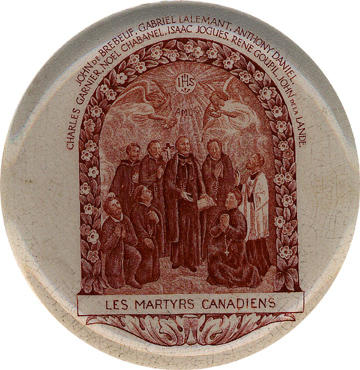
  • Wednesday, Oct 19th Saints John de Brebeuf, Isaac Jogues & their companions


St. Ignatius was the third bishop of Antioch (Peter was the first), and the person that first used the term “Catholic” to describe the Church. Like most of the Apostolic Fathers, he was martyred for his faith in Jesus. He was killed by animals in the Flavian Amphitheatre, more commonly known as the Coliseum in 107.

St. Luke was both an Evangelist, writing a the Gospel attributed to him, as well as the Acts of the Apostles, and a companion of the Apostle Paul. He gave his life in witness to our Lord Jesus in Greece, where he was crucified, probably on an olive tree.

Saints John de Brebeuf, Isaac Jogues and their companions were French Jesuit missionaries serving in Canada from 1625 to 1649, when they were were martyred — some tortured to death, others decapitated. This group of eight Jesuits became known as the North American Martyrs, and were canonized in 1930. The names of the companions were: John de la Lande, Gabriel Lalemant, Charles Garnier, Anthony Daniel, Rene Goupil and Noel Chabanel.

Some people might think that the days of the martyrs are long gone. That most of the martyrs came during the early formation of the Church, and the ensuing persecutions by various Roman emperors. While it is true that many were martyred during these times; unfortunately the days of the martyrs are anything but over.

There are more martyrs of the 20th century then any previous century in the life of the Church. Thousands of new martyrs have offered their lives even in these latter days, primarily in Africa and Asia. Christianity is persecuted in many countries even today, with torture being used commonly against Christians.

Take a moment and pray for our brothers and sisters who suffer so badly because of their belief in Christ; they need our prayers and support. How beautiful a world it will be when all are afforded religious freedom. Until that day we will continue to have fearless role models that make present today the same fire and fervor that Ignatius, Luke and the Canadian Jesuits exhibited.

Pray for us, holy martyrs of God!

Categories: Catechetics, Etymology, Jesuits, Saints | Leave a comment

Stewardship Witnesses


This weekend we are having lay persons give a witness talk about stewardship in conjunction with our parish and archdiocesan annual appeals. Our archdiocese does this each year, and I always enjoy it.

I enjoy it not only because stewardship is important to me professionally (I am the Stewardship & Development Director of our parish), but even more so because it provides yet another way to deliver an unchanging message with fresh faces, fresh ideas and fresh vitality.

My personal gratitude goes out to all those persons who have accepted the invitation to share their stewardship story with St. Gerald; for the very act of witnessing to the importance and need of stewardship is itself a profound act of stewardship!

People often confuse stewardship (a way of authentically living the Gospel) with raising money. Although treasure plays into the way we respond as stewards, it is neither the only way nor even the most important way. Investing our time to serve the Church, the Body of Christ is the most valuable exercise of stewardship.

If you are not active in your own parish, start now. Call the office, find a ministry, group or committee that would benefit from your gifts, and sign up! Your parish family needs you, the Church needs you, and most of all, our Lord Jesus Christ needs you.

Well done, good and faithful steward, well done!

Categories: Catechetics, Stewardship | Leave a comment

Yom Kippur


Today the Jewish high holy day of Yom Kippur continues.

Our late Holy Father, John Paul II, described Judaism as our “elder brother in faith.” It is very important for all Christians, and most certainly all Catholics, to study Judaism, at least in some form, as our faith was born from it.

Remember – Jesus, all the apostles, Mary, Joseph, John the Baptist, Zachariah, Elizabeth and most of the disciples were Jews. Most of the first members of the Church were Jews.

The most enjoyable and fascinating class I ever took in the seminary was on Jewish Studies. It was co-taught by a Benedictine monk and a Jewish rabbi. Part of the course included attending services for the high holy days at the synagogue, attending a bar mitzvah, and attending a regular Sabbath service as well. The course was funded in part by B’nai B’rith.

As a result, you will sometimes read on this blog comments about Judaism, especially in the context of relation to Christian thought and Catholic liturgy.

Yom Kippur is a high holy day – the most important one, and always occurs on the 10th day of Tishri, the seventh month of the Jewish calendar (Judaism uses a lunar rather than a solar calendar). This feast is commanded by Adonai (the LORD) in Leviticus 23:26-32.

It is the Day of Atonement – a day set aside for Jews to atone for the sins committed against the LORD. Sins committed against other people require the Jew to seek that person out, and to reconcile with them before Yom Kippur.

The day is a day of total fast, no work, no food, and no water. Services are held at the synagogue both nights and during the day.

Two important events occur during the feast.

  1. On the first night (Wednesday evening) the singing of the haunting melody of the Kol Nidre begins the feast. Kol Nidre translates “all vows” and is sung to the LORD asking Him to annul all personal vows made during the following year. Historically this was very important to Jews that were forcibly converted (under threat of violence) during the Spanish Inquisition. Singing of the Kol Nidre allowed these ones to tell the LORD that they acted under duress, and were still true to Him in their hearts and minds.
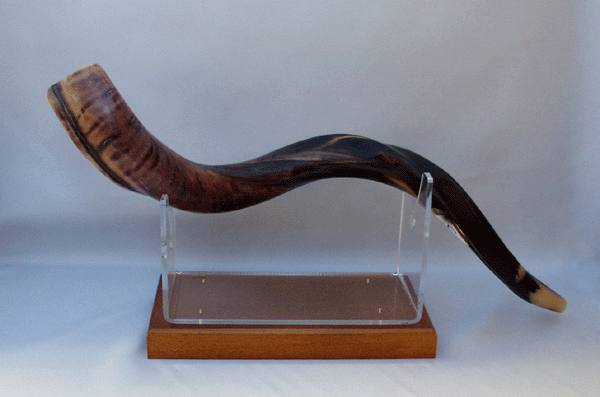
  2. The next evening (Thursday) the feast concludes with the Ne’ilah service – during which the ark containing the Torah remains open for the entire service – necessitating all to stand for the entire liturgy. Blowing of the shofar (a ram’s horn) concludes the service and the holy day.

(here is a photo of a shofar)

We pray today for all Jewish people, the first to receive the word of God, and who continue to hold a special place in the Lord’s heart as His Chosen People.

PS: To those confused by the two-day timing of the feast, please remember that Jewish time is reckoned from sunset to sunset. So the feast begins on Wednesday evening and lasts until Thursday evening. Those who pray the Liturgy of the Hours will recognize that Catholics still honor the Sabbath (the Lord’s Day, Sunday) in this way. Sunday Evening Prayer I begins on Saturday evening and the Lord’s Day continues until Night Prayer on Sunday night.

Categories: Catechetics, Comparative Religions | Leave a comment

Blog at WordPress.com.